
If you run a foundry anywhere around Peenya or the wider Bangalore industrial belt, you already know that a casting’s quality is decided long before molten metal ever touches sand. It’s decided at the pattern stage. A pattern that’s off by even half a millimetre carries that error into every casting pulled from it, which is exactly why so many production heads across Karnataka now depend on dedicated pattern making services Bangalore foundries can actually trust, rather than trying to run a tooling department in-house.
This guide walks through what pattern making involves, how shell mould tooling differs from core shooter machine tooling, the materials that go into durable pattern equipment, and why a growing number of foundries choose to outsource rather than build internal capability from the ground up.
In this guide:
- Shell Mould Pattern Making: Process, Materials & Design Guide
- Match-Plate Mounting Explained: What Foundries Need to Know
- Core Box Equipment Design for Core Shooter Machines
- Gating & Ejection System Design for Shell Moulding Patterns
- Fettling Allowance: Why It Matters in Pattern Design
- How to Choose a Pattern Making Company for Your Foundry
What Pattern Making Actually Involves
A pattern is the master shape from which a mould cavity is formed. Every dimension on the finished casting — wall thickness, boss height, parting line, draft angle — traces back to a decision made on this piece of tooling, usually months before the first casting is poured. Get it right and a foundry can run thousands of cycles with consistent yield. Get it wrong and every downstream department, from moulding to fettling to inspection, ends up compensating for a problem that should never have existed.
That’s the real reason pattern making services Bangalore manufacturers ask for aren’t a commodity purchase. A pattern maker isn’t just cutting metal to a drawing; they’re anticipating how the tool will behave inside a shell moulding machine or a core shooter, how it will wear over ten thousand shots, and where shrinkage, draft, and gating need to be built in before the first trial mould is ever pulled.
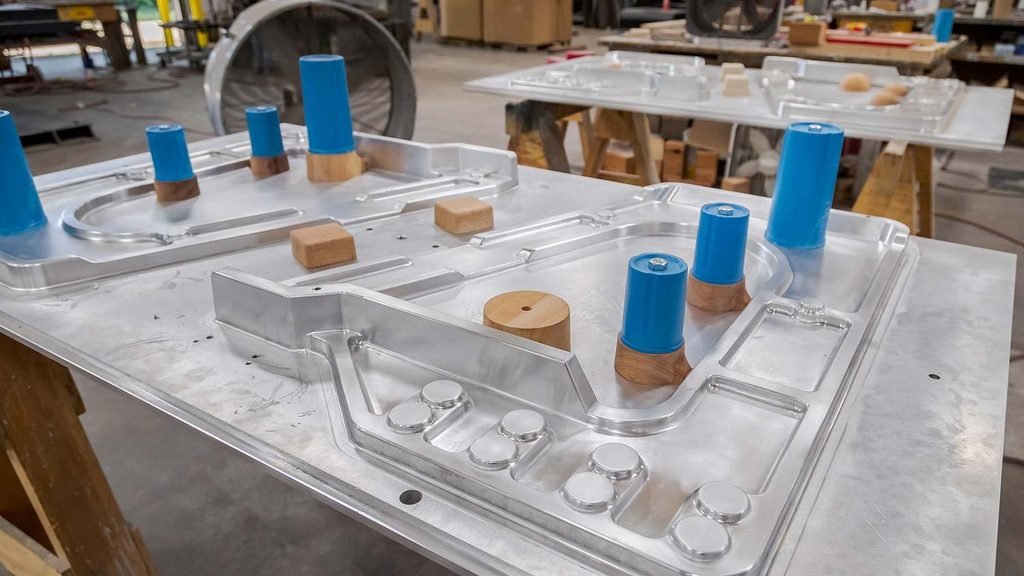
Shell Mould Patterns vs Core Shooter Machine Patterns
Two families of tooling dominate foundry work in this region, and they solve different problems.
Shell mould patterns are heated match-plate or cope-and-drag tools that form a thin, rigid resin-bonded sand shell around the pattern surface. They’re prized for dimensional accuracy and a clean surface finish, which is why they’re the default choice for medium-complexity components that need to be machined with minimal stock allowance afterward.
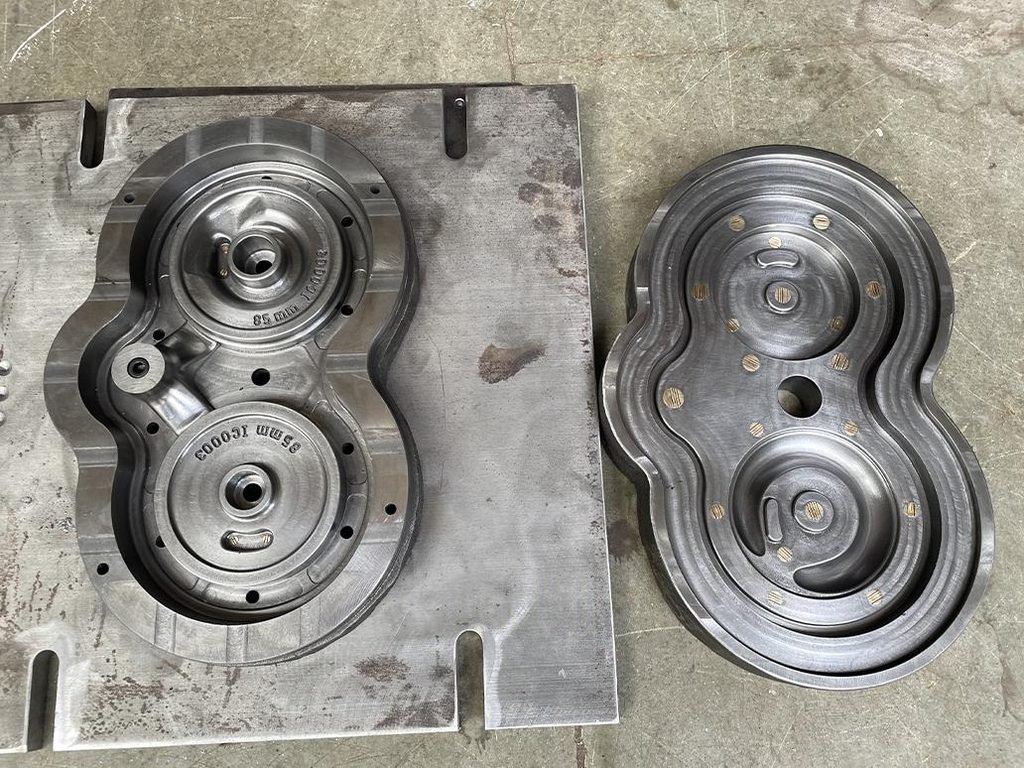
Core shooter patterns, by contrast, are designed to sit inside a core box and be filled at speed and pressure by a core shooter machine. These tools have to survive rapid thermal cycling and repeated blow-fill without cracking, and they need venting built in so gas escapes cleanly instead of getting trapped and blowing a defect into the core.
A foundry buying pattern making services Bangalore-based vendors offer will usually need both types across a single component family — shell tooling for the outer mould and core box tooling for internal passages — which is one reason working with a single pattern partner who understands both disciplines saves a lot of coordination headaches later.
Materials Used in Pattern Making
The material behind a pattern determines how long it survives in production and how tight a tolerance it can hold. Common choices include:
- Aluminium — light, easy to machine, and the standard choice for medium-run shell mould tooling where cycle counts run into the low thousands.
- Cast iron and tool steel — heavier and slower to machine, but they hold dimensions across very high production volumes and resist the thermal fatigue that comes from constant heating in shell moulding.
- Epoxy resin and resin composites — used for prototype patterns or short-run tooling where speed to first casting matters more than tool life.
- Graphite — occasionally specified for specific core box applications where thermal conductivity needs to be managed carefully.
Choosing between these isn’t just a cost decision. A pattern maker has to weigh expected run length, part geometry, and how the tool will be mounted, because the wrong material choice shows up months later as premature wear rather than as an obvious defect on day one.
The Mahati Process
At Mahati, pattern development follows a sequence built specifically around what shell moulding and core shooter production actually demand, not a generic tool-room workflow borrowed from plastics or die casting.
- Drawing review and DFM feedback — every casting drawing is checked for draft, shrinkage allowance, and parting-line feasibility before a single piece of aluminium is touched.
- Pattern layout and gating design — gating, venting, and ejection are planned into the tool from the start rather than added afterward as a fix.
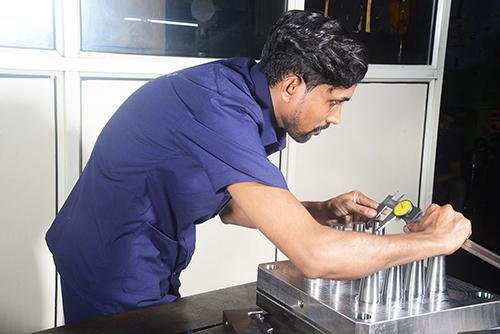
- CNC machining of the pattern equipment — tight, repeatable tolerances are held on precision CNC machinery, with fixturing built to hold the same reference points through every operation.
- Match-plate mounting and trial shots — the finished pattern is mounted and trial-shot on a shell moulding or core shooter machine to confirm fill, ejection, and dimensional accuracy before sign-off.
- Handover with process documentation — the foundry receives the pattern along with recommended shooting parameters, so the tool performs the same way on their floor as it did on the trial machine.
That last step is where a lot of pattern making services Bangalore foundries have used in the past have historically fallen short — a tool handed over without process guidance often takes weeks of trial and error to dial in, cost that shows up nowhere on the original invoice.
Why Bangalore and Peenya Foundries Outsource Pattern Equipment
Peenya is one of the densest industrial clusters in South India, and most of the foundries operating there are small to mid-sized shops running lean. Building an in-house tool room means carrying CNC machines, skilled pattern makers, and design engineers on payroll year-round, even during the months when no new tooling is needed.
Outsourcing to a specialist changes that equation. A dedicated pattern partner spreads machine and engineering cost across many customers, which keeps per-tool pricing lower than most in-house departments can match. It also means a foundry gets access to design expertise — draft angle calculation, shrinkage allowance, gating simulation — that would otherwise require hiring a specialist most shops don’t have enough tooling volume to justify keeping busy full time.
There’s a quality argument too. A vendor who builds nothing but pattern equipment sees a far wider range of failure modes across different alloys, wall thicknesses, and machine types than any single foundry’s tool room ever will. That accumulated experience is exactly what shows up as fewer trial iterations and faster time-to-production when a new component is being brought online.
This is also why the search for pattern making services Bangalore buyers actually convert on usually comes down to more than machining capability alone — it comes down to whether the vendor understands shell moulding and core shooter production well enough to hand over a tool that runs right the first time.
Common Mistakes Foundries Make When Sourcing Pattern Equipment
Even experienced procurement teams make avoidable mistakes when sourcing pattern making services Bangalore vendors offer. The most frequent one is choosing a vendor purely on quoted price without checking whether trial shots and process documentation are included, only to discover later that “cheaper” tooling needs weeks of on-machine adjustment before it runs reliably.
A second common mistake is treating pattern replacement as a purely reactive decision — waiting until an existing tool is visibly worn or cracked before contacting a vendor, rather than planning replacement around expected shot life. This almost always results in unplanned downtime, since a rushed replacement pattern rarely gets the same level of design review as one ordered with proper lead time.
A third mistake is failing to share full production context with a pattern vendor — actual cycle counts, the specific alloy grade being poured, and how a component is fettled downstream. Pattern making services Bangalore foundries book without providing this context often end up with tooling that’s technically correct on the drawing but poorly matched to how the part is actually produced day to day.
What Good Pattern Equipment Actually Costs
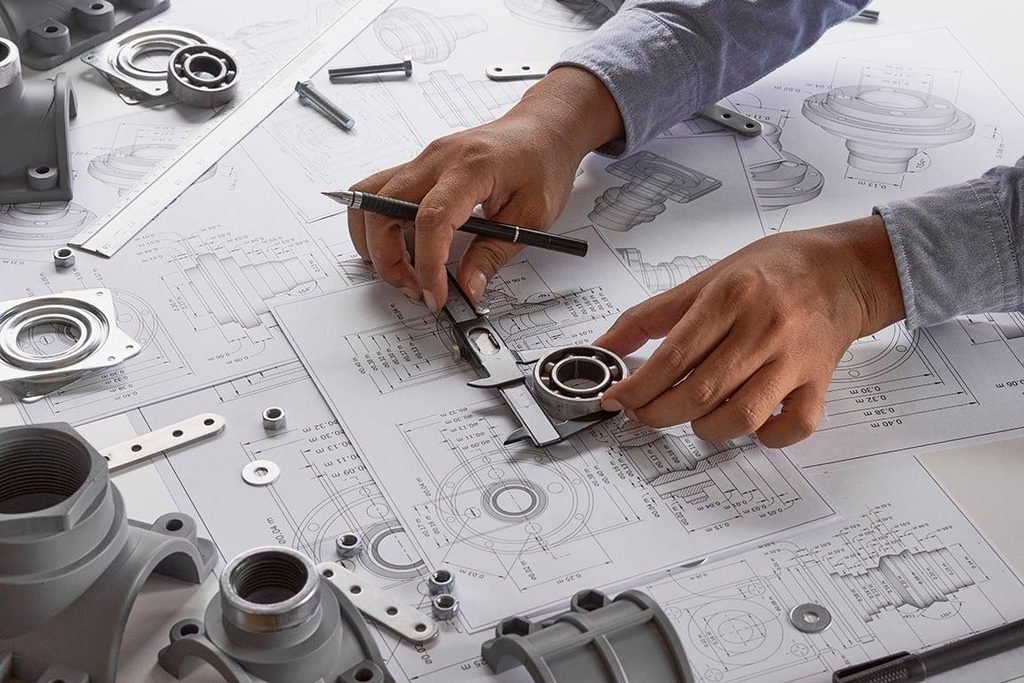
Pricing for pattern making services Bangalore buyers request varies significantly based on material, complexity, and expected production volume, which makes a simple per-tool comparison across vendors somewhat misleading. A resin prototype pattern for a low-volume component costs a fraction of a hardened tool-steel pattern built for a hundred-thousand-shot production run, and comparing the two on price alone misses the point entirely.
The more useful way to evaluate cost is against total cost of ownership — tool life, trial iterations needed before sign-off, and how much fettling or rework the finished casting requires because of gating and ejection decisions made at the pattern stage. A slightly higher upfront tooling cost that eliminates weeks of trial-and-error adjustment, or that cuts fettling time on every casting produced afterward, is almost always the cheaper option once the full production run is accounted for.
Where to Go Deeper
This guide is the starting point for the full cluster. If you’re evaluating a new pattern vendor, the Shell Mould Pattern Making: Process, Materials & Design Guide breaks the process down step by step, and its two child posts cover match-plate mounting and core box design in detail. For teams focused on reducing defects and rework, Gating & Ejection System Design for Shell Moulding Patterns — along with its posts on fettling allowance and vendor selection — is worth reading next.
Pattern equipment also feeds directly into the casting process itself, so it’s worth reading alongside our guide to sand and shell casting, and into the finishing stage covered in our CNC machining guide, since most patterns pass through CNC operations before they ever reach a moulding line.
What to Expect When You Start the Conversation
Foundries reaching out for the first time often want to know what a typical engagement actually looks like before committing to anything. In practice, most pattern making services Bangalore vendors run through a fairly consistent sequence: an initial drawing review and quote, a design and machining phase, a trial shot for approval, and a handover that includes process documentation for running the tool on your own machine.
Timelines vary with complexity and material, but a straightforward aluminium shell mould pattern typically moves from approved drawing to trial-shot tool in a matter of weeks rather than months, while more complex multi-cavity tooling or hardened tool-steel programs naturally take longer. Asking a prospective vendor for a realistic, project-specific timeline — rather than a generic estimate — is one of the simplest ways to avoid surprises once a purchase order is placed.
Talk to a Pattern Making Partner
If your foundry is weighing whether to keep tooling in-house or bring in a specialist, the conversation is usually worth having before the next new component lands on your desk rather than after. Get in touch with our team to walk through your drawings and production volumes, or visit our pattern making service page to see the full range of shell mould and core shooter tooling we build for foundries across Bangalore and beyond.
Frequently Asked Questions
1. What exactly does pattern making involve in a foundry context?
Pattern making is the process of designing and building the tooling — patterns, match-plates, and core boxes — that shapes the mould cavity a casting is formed in. It happens well before any metal is poured, and it determines dimensional accuracy, surface finish, and how efficiently a component can be produced downstream.
2. How long does it typically take to get a new pattern made?
For a straightforward aluminium shell mould pattern, expect a few weeks from approved drawing to a trial-shot, production-ready tool. More complex multi-cavity layouts or hardened tool-steel programs take longer, so it’s worth asking any vendor for a project-specific estimate rather than relying on a generic timeline.
3. What’s the real difference between shell mould and core shooter patterns?
Shell mould patterns are heated tools that form the outer mould cavity with a thin resin-bonded sand shell, prized for accuracy and surface finish. Core shooter patterns sit inside a core box and are filled at speed to create internal passages a shell mould pattern can’t produce on its own. Many components need both.
4. Is it actually cheaper to outsource pattern making than build an in-house tool room?
For most small and mid-sized foundries, yes. An in-house tool room means carrying CNC machines and skilled pattern makers on payroll year-round, even during slow periods. Outsourcing spreads that cost across a specialist vendor’s full customer base, which usually brings per-tool pricing down without sacrificing quality.
5. Which pattern material lasts longest in high-volume production?
Tool steel typically holds tolerance across the highest shot counts, making it the standard choice for long production runs, though it costs more upfront and takes longer to machine than aluminium. Aluminium remains the practical choice for most medium-run programs, balancing cost, machinability, and reasonable tool life.