Gravity die casting sits between sand casting and pressure die casting — offering better accuracy than sand, at a lower tooling cost than pressure die. This guide covers how gravity die casting works, its benefits and limits, typical applications, and how tooling and production are managed.
For automotive and hydraulic component buyers weighing process options, gravity die casting is frequently the most cost-effective route once volume climbs past what sand casting comfortably supports.
What Is Gravity Die Casting?
How the permanent-mould process works
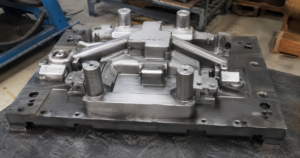
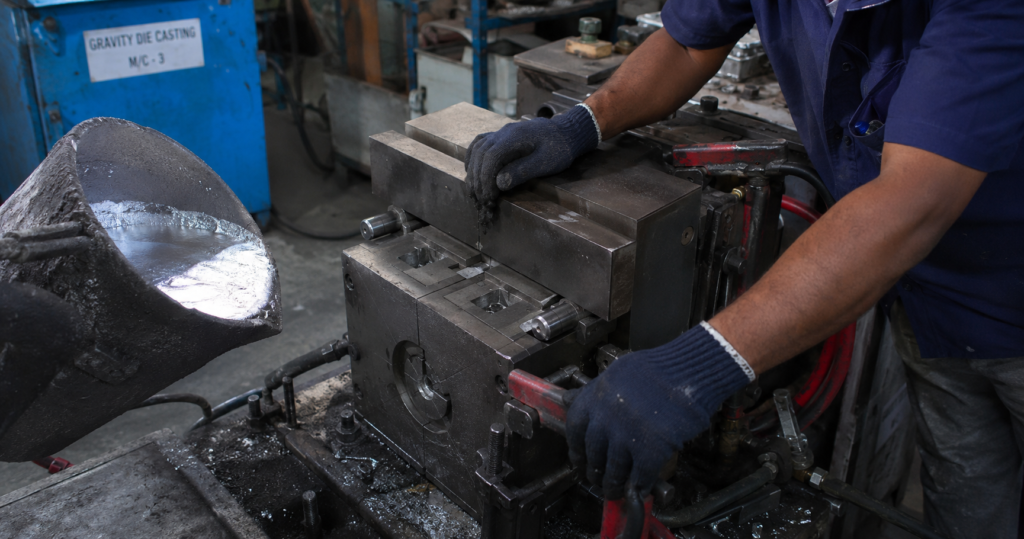
Gravity die casting pours molten metal into a reusable steel die under normal gravity, without external pressure — the die is used thousands of times before replacement.
Why gravity filling improves soundness
Filling under gravity, rather than forced pressure, reduces turbulence in the mould — a key reason gravity die casting produces sound, reliable parts for load-bearing applications.
Where it fits vs sand and pressure die
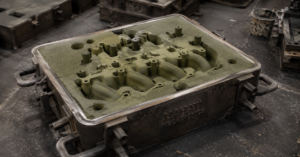
Gravity die casting sits in the middle of the process spectrum: better accuracy and finish than sand casting, but lower tooling cost and cycle speed than pressure die casting.
Process comparison at a glance
| Process | Tooling cost | Accuracy | Typical volume |
| Sand casting | Low | Standard | Low-medium |
| Gravity die casting | Medium | Good | Medium-high |
| Pressure die casting | High | Tight | High |
Benefits and Limitations
Dimensional accuracy and finish
Gravity casting delivers noticeably better dimensional accuracy and surface finish than sand casting, at a fraction of the tooling investment of pressure die casting.
Mechanical properties
Parts produced by gravity die casting typically show better mechanical properties than sand-cast equivalents, due to the controlled solidification in a permanent steel die.
When it isn’t the right choice
Very low volumes rarely justify gravity casting tooling cost, and extremely thin-wall parts are usually better served by pressure die casting instead.
Typical Applications
Automotive components
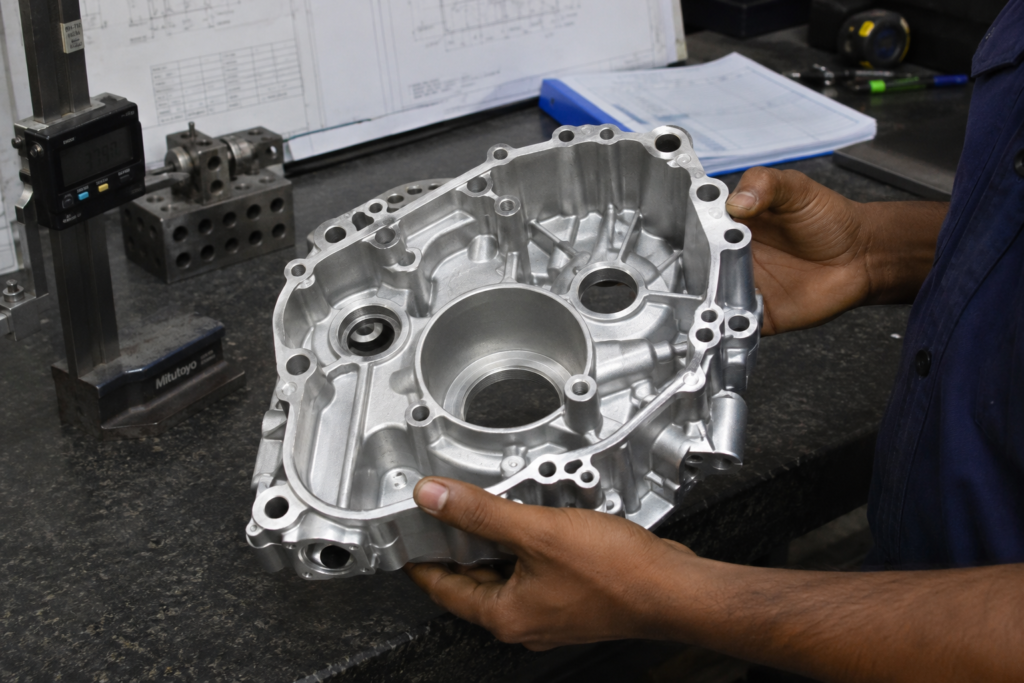
Automotive housings and brackets are a common application for gravity casting, where consistent properties across a production run matter.
Hydraulic parts
Hydraulic components benefit from the soundness gravity die casting provides, reducing the risk of pressure leaks.
Medium-to-high volume runs
Once annual volume climbs into the thousands, gravity casting tooling cost is usually recovered quickly through lower per-part cost.
Tooling and Production
Die design basics
Die design for gravity casting accounts for gating, venting and thermal balance across the mould — details that determine both part quality and die life.
First-article and validation
- Review drawing and confirm material and volume for gravity casting.
- Design and manufacture the permanent die.
- Cast and inspect a first-article sample.
- Approve and scale to full production.
Scaling production
Once validated, gravity casting production scales using the same die, with periodic quality checks across the run.
Talk to Our Gravity Die Casting Team
Mahati Mecatronics produces gravity casting components for automotive and hydraulic customers from its Bangalore facility.
Frequently Asked Questions
Q. What are the advantages of gravity die casting?
It offers excellent dimensional accuracy, good surface finish and superior mechanical properties compared with sand casting, at economical medium-to-high volumes.
Q. What metals are used in gravity casting?
Aluminium alloys are the most common, valued for strength-to-weight and thermal properties.
Q. Is gravity casting good for automotive parts?
Yes — its accuracy and consistent properties make it well suited to automotive and hydraulic components.