Table of Contents
Cast iron and SG iron castings cover most of what a heavy engineering or automotive buyer needs from a ferrous foundry — but the two materials behave very differently under load. This guide compares cast iron and SG iron castings against steel, covers where each material is used, and explains how quality is verified.
Getting the choice between cast iron and SG iron castings wrong is one of the more expensive material mistakes, since the two look similar on a drawing but perform very differently once a part is in service. This reference is designed to make that choice straightforward.
Understanding Ferrous Casting Materials
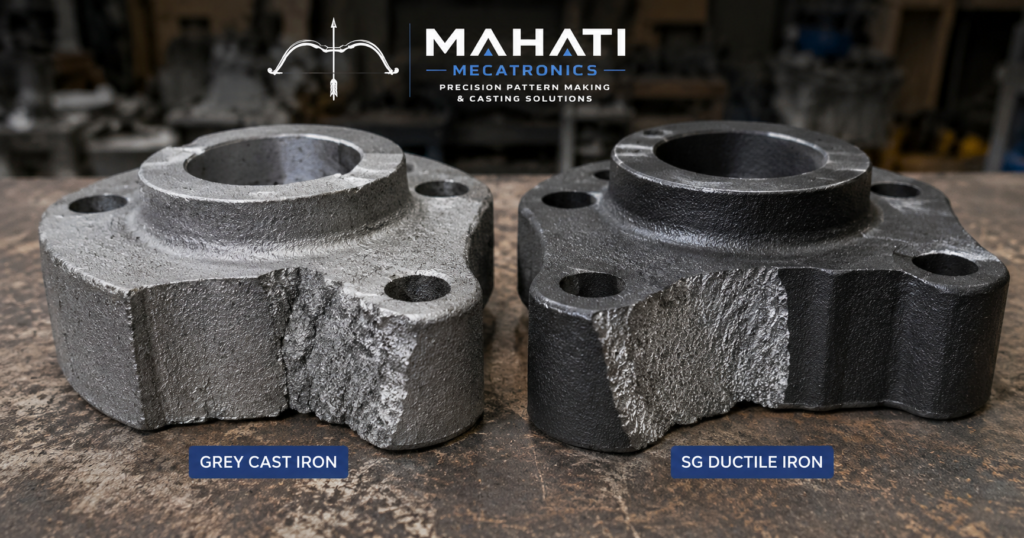
Grey cast iron characteristics
Grey cast iron is inexpensive, easy to machine, and has excellent vibration damping — a common baseline material before comparing cast iron and SG iron castings for a specific application.
SG/ductile iron characteristics
SG iron, also called ductile iron, offers significantly higher strength and ductility than grey cast iron. Among cast iron and SG iron castings, SG iron is the go-to when a part needs to survive shock loading.
Cast steel characteristics
Steel castings sit above both cast iron and SG iron castings in raw strength and toughness, at a higher cost and lower machinability.
Quick property reference
| Property | Cast iron | SG iron | Steel |
| Strength | Moderate | High | Highest |
| Ductility | Low | Good | Good |
| Machinability | Excellent | Good | Moderate |
| Damping | Excellent | Moderate | Low |
Cast Iron vs SG Iron vs Steel
Strength and ductility
Ductility is the clearest dividing line between cast iron and SG iron castings — SG iron bends before it breaks, while grey cast iron is comparatively brittle.
Damping and machinability
Cast iron and SG iron castings both machine more easily than steel, with grey cast iron offering the best vibration damping of the three.
Cost and application fit
Cost typically rises from cast iron through SG iron to steel — the right choice among cast iron and SG iron castings (or steel) depends on load, not just budget.
Where Each Material Is Used
Housings and casings
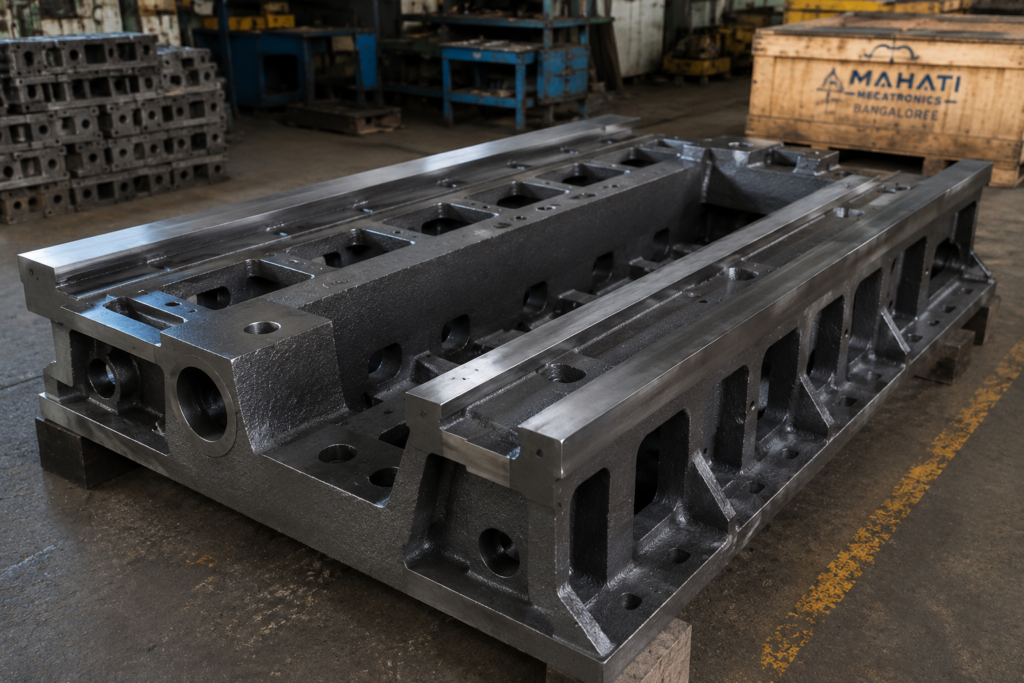
Machine housings and casings are a classic use for cast iron and SG iron castings alike, chosen based on whether shock loading is expected in service.
Load-bearing and shock parts
- Pump casings — commonly SG iron for pressure integrity.
- Automotive brackets — SG iron where shock loading occurs.
- Machine bases — grey cast iron for damping.
Structural and high-load castings
Where cast iron and SG iron castings aren’t strong enough, steel castings take over for structural and heavily loaded components.
Quality and Inspection
Metallurgical checks
Every batch of cast iron and SG iron castings is metallurgically checked to confirm the correct grade was actually poured, since a visual check alone cannot distinguish cast iron and SG iron castings reliably.
Dimensional inspection
Dimensional inspection against the drawing applies equally across cast iron and SG iron castings and steel parts.
Certification
Material certificates accompany every order, particularly important where cast iron and SG iron castings are specified for load-bearing service.
Talk to Our Ferrous Castings Team
Mahati Mecatronics supplies cast iron and SG iron castings, along with steel castings, from its Bangalore facility. Our team can recommend the right choice among cast iron and SG iron castings once we’ve reviewed your drawing and load requirements.
Frequently Asked Questions
A few questions come up consistently when customers compare cast iron and SG iron castings for a new part.
Q. Is SG iron better than cast iron?
SG iron is stronger and more ductile, suited to load-bearing parts, while grey cast iron offers better vibration damping and easier machining — the best choice depends on the application.
Q. When should I choose steel castings?
Choose steel castings for the highest strength and toughness in heavily loaded structural or impact applications.
Q. What are cast iron parts commonly used for?
Machine bases, housings, gearbox cases and bed castings, where damping and machinability are valuable.